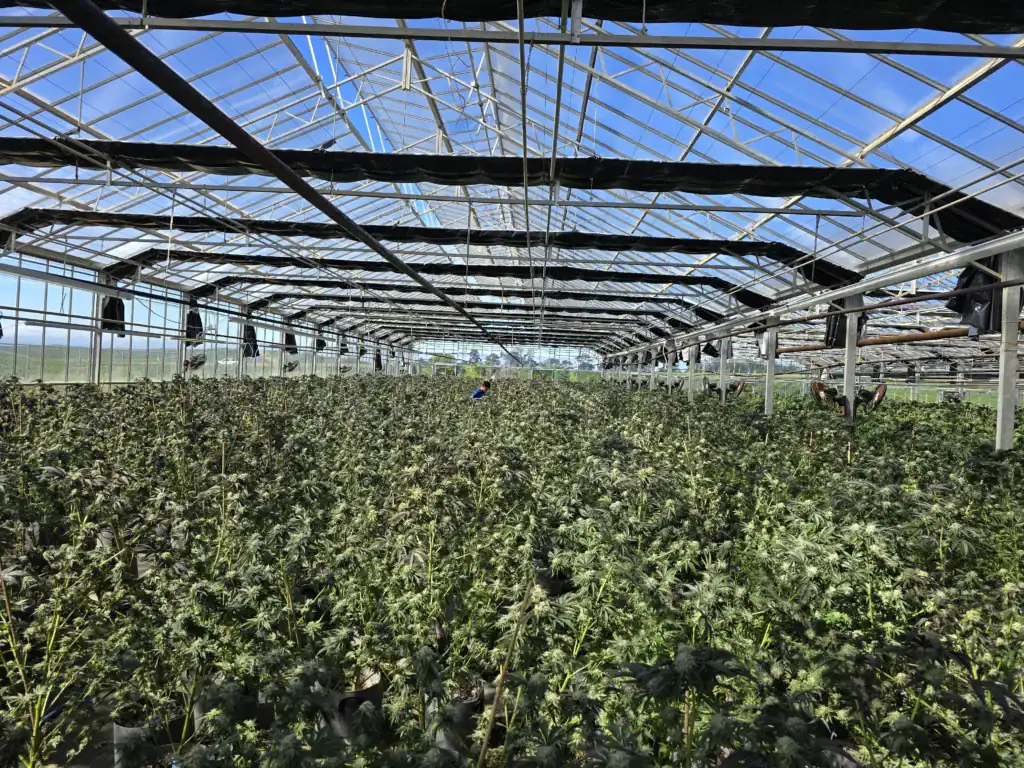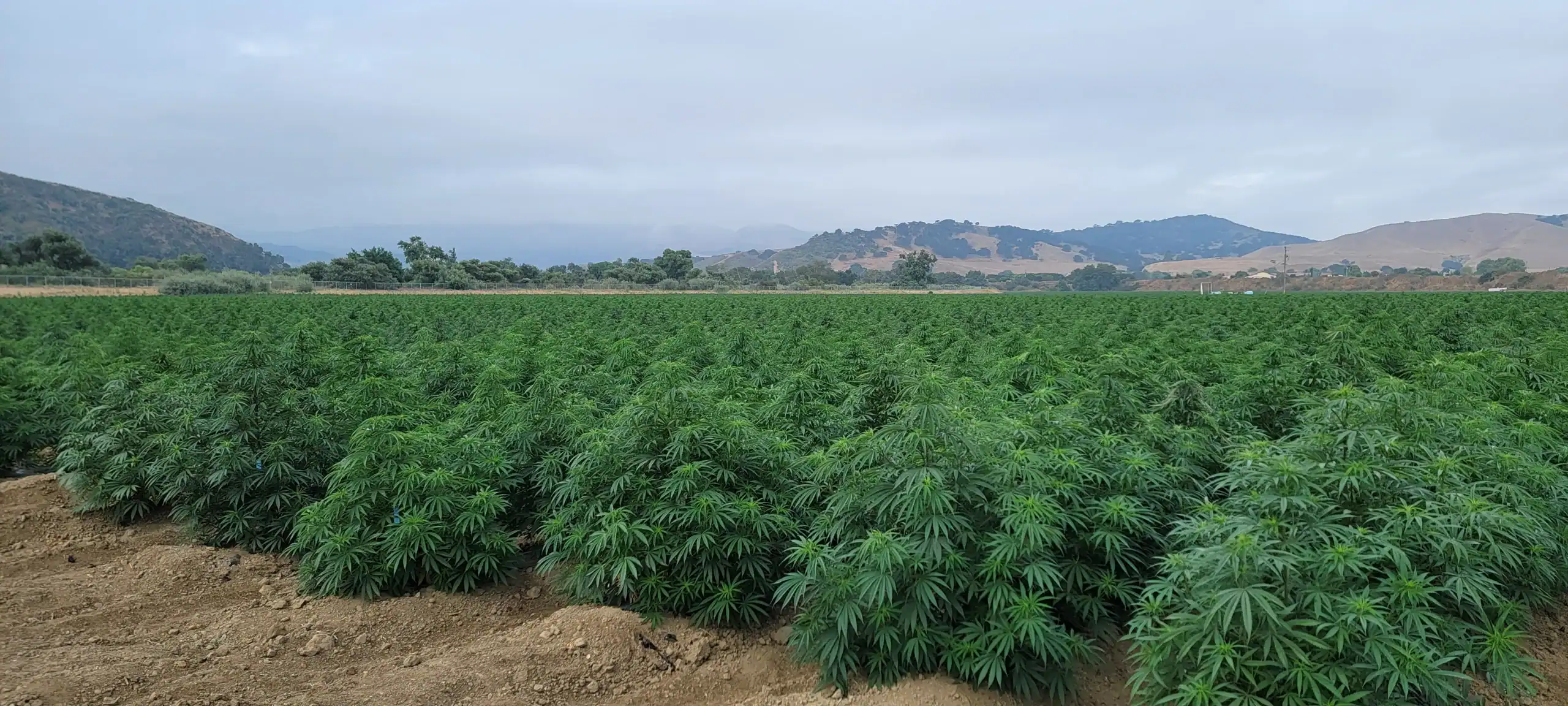

In 2021, I was voluntold I’d be running compliance for a 40-acre outdoor cannabis farm.
Not asked. Voluntold.
That farm held 185 small outdoor cultivation licenses. And everything that was available on the market at that time — every compliance tool, every software platform, every workaround we could find — was not built for what we were about to do.
So we figured it out the hard way.
Season 1: The System We Had to Build Around
The farm’s first harvest under our watch was, to put it charitably, an exercise in controlled chaos.
For the first two weeks, here’s what compliance looked like on a 40-acre outdoor operation with 185 licenses:
- Field crew recorded weights by hand in a notebook
- Someone took a photo of the notebook and texted it from the field
- We transcribed those numbers into Excel
- We built a METRC-compatible CSV from the spreadsheet
- We chunked the CSV into small enough pieces that METRC wouldn’t time out mid-upload
- We uploaded
- We watched METRC’s spinning wheel
- It timed out anyway
- We re-chunked the CSV
- We renamed it — METRC won’t accept the same filename twice
- We tried again
- We finally got the harvest data to push
- We created packages
- We built the manifest
Manifests took over two hours. The farm owner was outside watching his freshly harvested plants sit in the sun.
Turning into cannabis soup.
I will be honest: I was not fun to be around during those first two weeks. I was stressed to the absolute limit, staring at that spinning wheel and willing it — with everything I had — to move faster. It did not move faster.
Kapono noticed.
The BaykedStation Is Born
About two weeks into that first harvest, Kapono’s nerdy side took over.
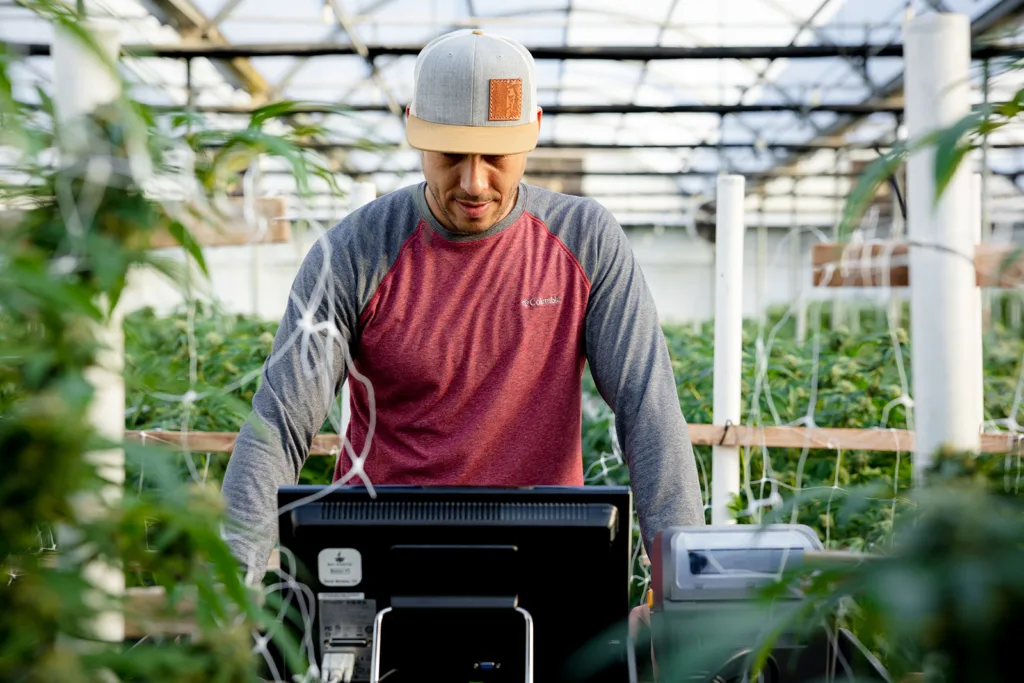
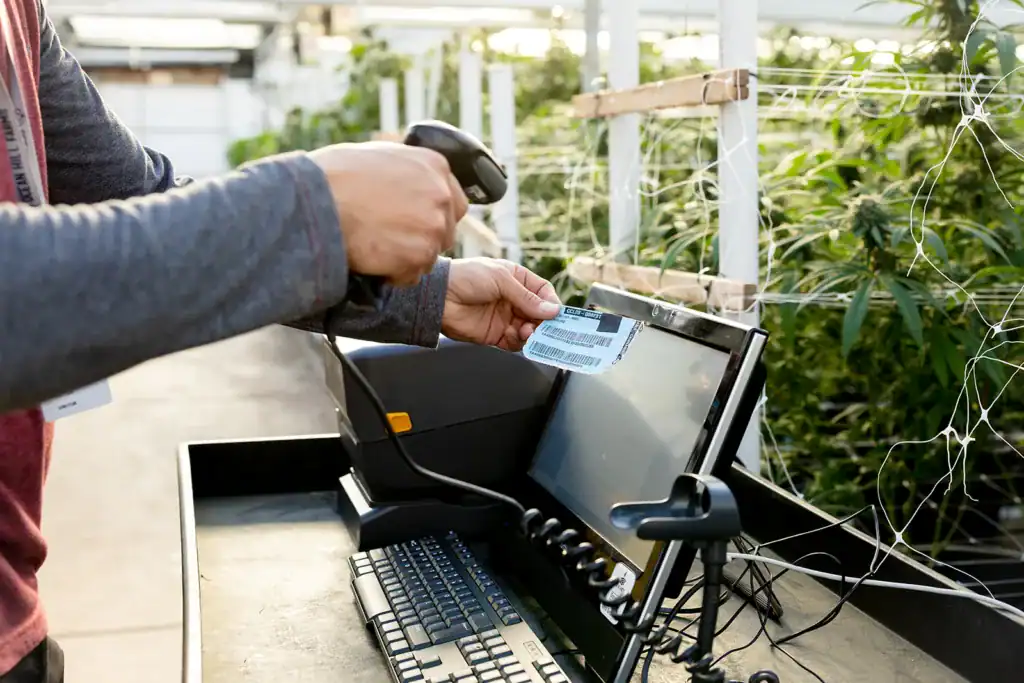
He built the first iteration of what we now call the BaykedStation — a dedicated hardware setup at each station in the field, connected to the scale, running our software. Instead of handwriting weights and texting photos of notebooks, field crew now had a computer right there at the scale. Data went in live, at the source. The whole thing was designed around one idea: if you can set up a PlayStation, you can set up a BaykedStation. Your field crew shouldn’t need an IT department to run a compliance workstation.
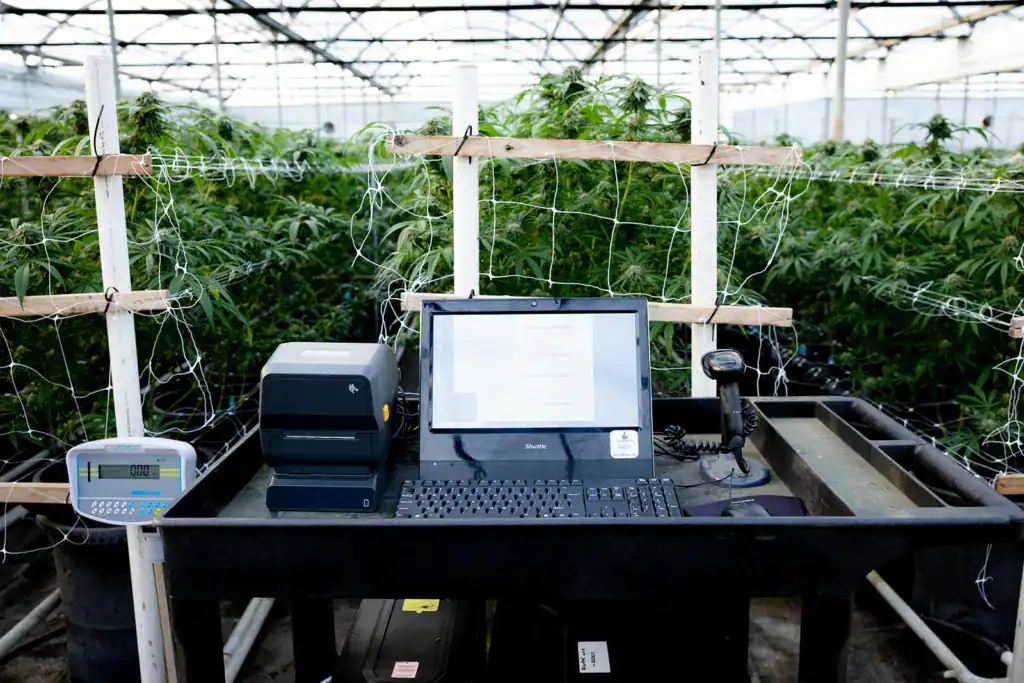
Four or five people worked the field, each manning a BaykedStation at their assigned station across the 185 licenses. When a session was done, they’d close out and email the file log to our compliance team off-site. We’d export that data into a METRC-ready CSV and pick up from there.
The CSV upload headache remained. The chunking, the renamed files, the spinning wheel — all of it was still there. Version 1 also had some quirks you just had to accept: don’t touch anything you aren’t supposed to. Don’t open the weight record outside the software, don’t accidentally close the program, because if you did, there was a real chance your data went with it. So we kept handwritten logs running in parallel anyway — not because we wanted to, but because we didn’t fully trust that we wouldn’t need them.
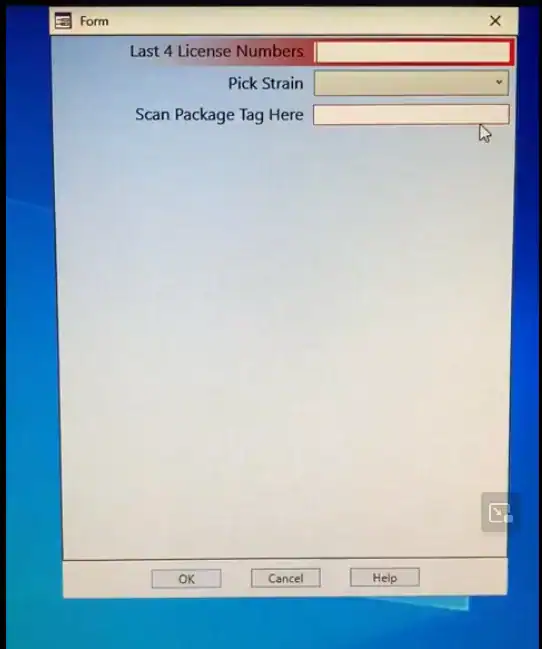
It wasn’t pretty. But even with all of that, Version 1 brought manifest times down from over two hours to 44 minutes. By October that season, that was a typical manifest, not the best day.
That was enough to prove it was worth building further.
That was nine people holding a compliance operation together — 4–5 in the field, 4 off-site. And most of those nine people were spending most of their time not on cannabis. They were on data entry, re-entry, uploads, re-uploads, file renames, and waiting.
What Actually Changed
We didn’t fix this in a day. We fixed it across five seasons of real-world iteration.
Every version of BaykedFarm since that first season was driven by operators asking for something specific. Not a product roadmap. Not a board of directors. Not investors who’ve never touched cannabis. The operators we worked with told us what was broken, and Kapono built the fix.
By 2025, we were on Version 7.
Here’s what changed for that same farm:
Direct METRC API integration replaced CSV uploads entirely. No more chunking, no more filenames, no more re-uploads, no more spinning wheel. Data pushes directly to METRC through crop.baykedfarm.com — faster, more reliable, and without a step where a human can introduce an error. The spinning wheel of death became a clean, visual dashboard you can actually stand to look at.
The system now does things Version 1 couldn’t have imagined. It tells you the next available package tag automatically. It pulls strains directly from METRC so field crew isn’t entering anything by hand. It pulls planting data directly from flowering — so you’re only harvesting plants that are actually ready to harvest. Inventory stays clean because the system won’t let it get messy in the first place.
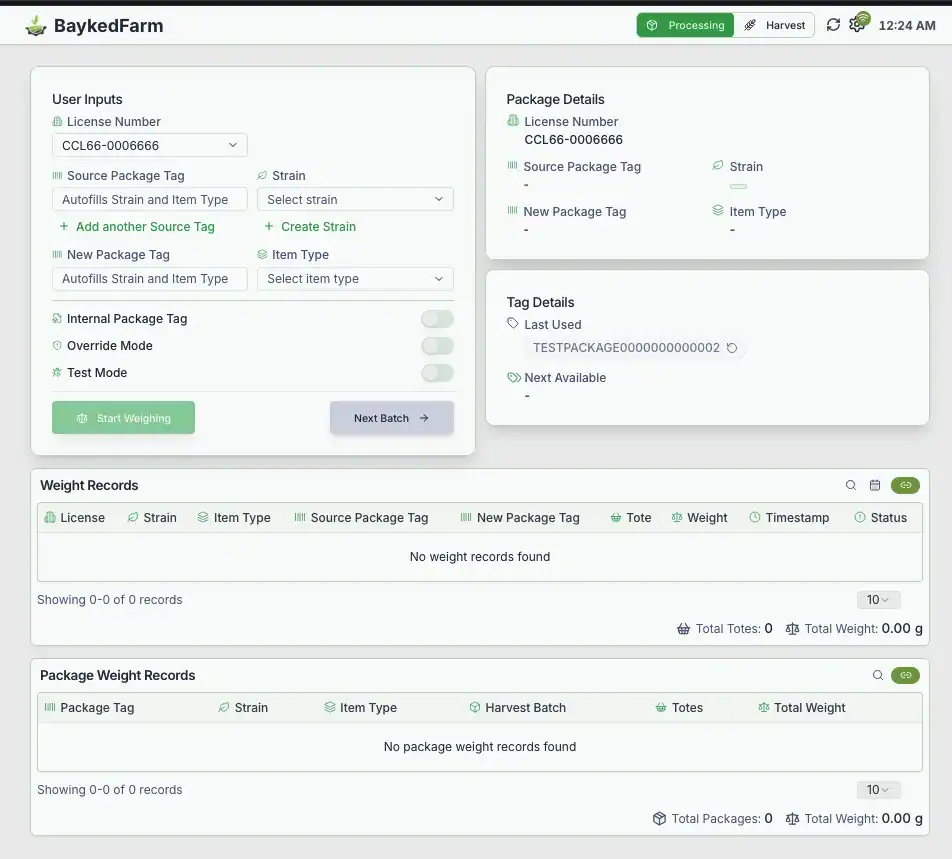
Field crew went from 4–5 people running 4 devices down to 1 person running one BaykedStation — 8,201 plants on the biggest day of the 2025 harvest.
The off-site compliance team went from 4 people down to 1 VA on a typical day, handling all harvest compliance activities remotely — the same VA team that’s been with us since that first season. Scott, Micah, and Lesly. They didn’t learn compliance in a classroom. They learned it the same way I did: on a 40-acre farm with 185 licenses, under pressure, with fresh product sitting outside.
And the manifests?
About ten minutes.
Usually less. Across the 2025 loads we timed, the median from last bin weighed to manifest created was 5.4 minutes, and the slowest was 13.6.
Same farm. Same harvest. Five seasons of iteration.
The Numbers, Side by Side
| First 2 Weeks (2021) | V1 BaykedStation (2021) | Version 7 (2025) | |
|---|---|---|---|
| Field staff | 4–5 people | 4–5 people | 1 person |
| Compliance staff | 4 people (off-site) | 4 people (off-site) | 1 VA (remote) |
| Total headcount | ~9 people | ~9 people | 2 people |
| Data capture | Handwritten notebook → photo text | BaykedStation at each scale | One BaykedStation |
| Data entry | Transcribed to Excel → CSV | File email → CSV export | Direct METRC API |
| Strains / tags / planting data | Manual | Manual | Pulled automatically from METRC |
| Manifest time | 2+ hours | 44 min – 2 hours | ~10 minutes |
| Backup records | Handwritten, always | Handwritten, always | Not needed |
| Product waiting outside | Yes — cannabis soup | Less, but still | No |
Nine people down to two. Two-plus hours down to about ten minutes, and often five. Notebook transcription and CSV roulette replaced by a system that pulls directly from METRC and pushes directly back. Backup notebooks replaced by a system that doesn’t need them.
Why This Matters Beyond the Numbers
The thing I think about most when I look at that comparison isn’t the time savings — though ten minutes versus two hours is hard to argue with.
It’s where all those extra hours were actually going.
In 2021, four people off-site were spending their days on data transcription, CSV formatting, METRC uploads, and manifest rebuilds. None of that was compliance work in any meaningful sense. It was error management. It was workaround labor. It was the cost of not having a system that connected directly to what was happening in the field.
The farm owner’s job wasn’t to watch his product turn into soup while his compliance team fought a CSV upload. His team’s job wasn’t to hand-transcribe notebook pages into Excel. My team’s job wasn’t to chunk CSV files into acceptable-sized pieces and rename them every time they failed.
None of that was the work. All of it was the gap between the work and the system.
Closing that gap is what the last five seasons of BaykedFarm have been about.
What a 10-Minute Manifest Actually Means
I want to be specific about what changes when you go from a 2-hour manifest to about 10 minutes, because the number alone doesn’t capture it.
A 2-hour manifest means your driver waits. Your truck idles. If data upstream was wrong, the manifest doesn’t just take longer — it doesn’t happen at all until someone corrects it, which means going back through a spreadsheet that was built from a handwritten note that was transcribed by someone who wasn’t there when the scale was read.
That chain has a break point in almost every link.
A 10-minute manifest means the data that went into it was captured at the scale. Strains pulled straight from METRC. Planting data confirmed before the first cut — so only plants that can legally be harvested are harvested. Everything validated inside the system before it ever touches METRC. The manifest generates from actual harvest batch records, not a reconstruction from notes, not a best-effort from memory.
On 1 October 2025, the last bin was weighed at 8:55:45. The manifest was created at 8:58:17.
Ten minutes isn’t just faster. It means the manifest is right.
On Starting From Where Most Operations Are Today
I’m not going to pretend the 2021 version of our operation was unusual. It wasn’t. Walk into most licensed facilities today and you’ll still see a version of what we were running in that first season.
Weights on paper or a whiteboard. Someone re-entering them into a spreadsheet. A compliance person rebuilding the data inside METRC from scratch. Labels reprinting because something didn’t match. METRC errors caught two weeks later, cleaned up retroactively. Manifests built manually, checked manually, sent late.
Most operators haven’t added it up. Not because they don’t care — because it doesn’t show up on a single line item. It hides in payroll, spread across four or five people who each lost part of their day to a system that wasn’t built for what they’re actually doing.
If you want to see what that looks like with your actual numbers, we built a calculator for it. No email required. Takes about 60 seconds.
BaykedFarm is a fully integrated hardware and software compliance system built for licensed cannabis operators. Version 7 is live. Full Service plans include Scott, Micah, and Lesly — a trained remote compliance team handling your METRC. Built for operators, not investors.
The farm referenced in this case study is a 40-acre outdoor operation in California. Operated under anonymity at the client’s request.