
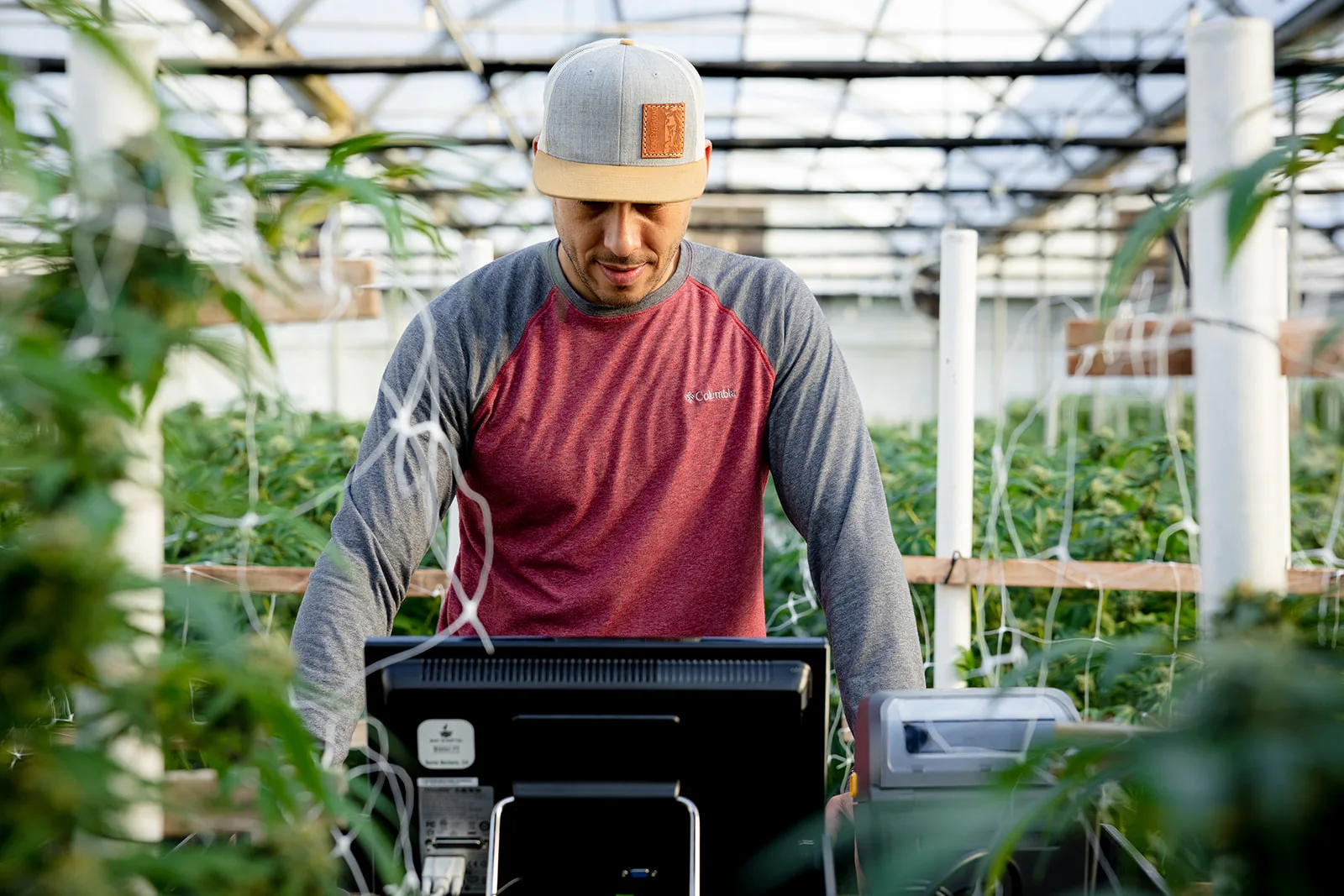
A few seasons ago, the thought of an inspector walking onto a farm in the middle of harvest would have made most of our clients nervous. Now it’s something we laugh about. We’ve had clients harvest with inspectors on site, and instead of scrambling, the crew walked them through the whole process: how each tote gets weighed, the label that prints out the moment the weight is captured, and everything in between. The harvest never stopped, and that kind of calm doesn’t happen by accident.
A compliant harvest is decided weeks before anyone picks up a pair of shears. By the time the crew is cutting, your METRC records either match what is physically in the room or they don’t, and harvest is the moment every gap from the last three months surfaces at once.
Harvest is also when an inspector gets the clearest picture of how a farm actually runs. Plant counts, weights, waste logs and timestamps all land in the system within a few days of each other, and they all have to agree. When they don’t, the problem rarely stays small: a missing tag becomes a count discrepancy, the discrepancy becomes a reconciliation headache, and the headache becomes a finding.
The good news is that a clean harvest comes down to five things. None of them are complicated. They just have to be done every time, in order, by people who know why they matter.
01 Plant tags match what is in the canopy
Every flowering plant in the room should carry a tag, and every active tag in METRC should point to a plant that is still standing. That sounds obvious, but over a long flower cycle the two can drift apart. A plant gets pulled for being a male or failed to thrive and nobody records the destruction. A tag falls off during defoliation and ends up in the trash. A few plants get moved to another room to even out spacing and stay assigned to the original location in the system.
The best safeguard is a tag walk in the week before harvest. Someone pulls the active plant list for each room, walks the rows with it, and confirms that tag numbers, strains and locations all match what they see. Any plant that is gone gets recorded as destroyed with its reason and its waste weight. Any plant in the wrong room gets moved in METRC before the harvest is created. Missing or damaged tags get flagged and replaced in METRC following DCC requirements rather than quietly swapped.
In a busy season, a full tag walk doesn’t always happen, and that’s the reality on most farms. Even a partial one helps: walk your largest rooms, or spot-check the plants that were moved or pulled during the flowering phase. Whatever you catch before harvest is one less discrepancy to chase down after it.
On harvest day, the cut itself is simple: take the whole plant at the base of the stalk, about an inch above the soil. As each plant comes down, pull its tag and drop it into a dedicated trash bag, with one exception: keep the first and last tag harvested for each strain. Those two tags give you a true plant-count range for what came down, and they let you confirm against METRC that the plants your crew cut are the plants the system says you harvested.
02 Wet weights recorded at harvest
Wet weight is the first number in the chain of custody for everything that plant will become, so every plant harvested gets weighed. Not a sample. Weighing a portion of the harvest and applying that average to the rest produces a number that was never actually measured, and that is a hard number to defend when your records are reviewed.
That doesn’t mean weighing plant by plant. Load plants into totes with their neighbors and weigh each tote, keeping strains separated and never mixing plants from different licenses. Capturing those weights on a BaykedStation records each tote as it crosses the scale with the push of a button, so nobody is transcribing numbers off a clipboard at the end of the day.
The BaykedStation is a complete weigh station that fits on a rolling cart: an NTEP-certified scale, a barcode scanner and a monitor in one setup. The crew scans the first and last plant tags, weighs the tote, and the weight goes straight into BaykedFarm, Bay Kinetic’s compliance platform, without anyone keying it in later.
Every tote should run through one dedicated, stationary weigh station, placed where nothing can leave the harvest area without crossing it. That single checkpoint is your checks and balances. In a greenhouse or building, it usually belongs by the door or at a central point where every weight can be collected. In the field, pour a level 6-foot by 6-foot concrete slab, six inches thick, so your scale sits on a solid, stable surface. A scale that stays put on level ground also holds its calibration far better than one that gets moved around the farm. In California, the scale must also be a type-approved device certified by your county sealer of weights and measures. Tare the scale with an empty tote before you start weighing, so every weight you record is plant material only and not the container it came in.
When wet weights are captured carefully, the later drop to dry weight tells a believable story. When they’re estimated or rounded, the moisture loss looks arbitrary, and an arbitrary number is exactly what invites a closer look.
The weighing shouldn’t stop once the harvest is in, either. Recording weights at every stage, from wet weight through drying, bucking and trimming, is the only way to know your true harvest yield and to account for where every pound went.
03 Harvest batches that make sense
A harvest batch should describe something real: one strain, from one location, cut on one day or a defined window. When batches follow that logic, everything that comes out of them, from dry weight to lab samples to packages, traces back cleanly to a specific group of plants. When batches are lumped together for convenience, a single failed test or recall can pull far more product off the shelf than it needed to.
Settle on a naming convention before harvest season, not during it. A name that carries the strain, the location, license number, and the harvest date tells anyone on your team, or an inspector, what the batch is at a glance. Avoid names that only make sense to the person who created them, and avoid reusing names across seasons.
Think ahead to where the batch is going. If the harvest is staying on the license, hang it in your dry room separated by harvest batch, so the physical layout of the room mirrors what is recorded in METRC. If two rooms of the same strain will hang in separate spaces and be bucked at different times, they are probably two batches.
In California, that separation is now a regulatory requirement rather than a best practice. Under DCC’s revised regulations, effective July 1, 2026, every harvest batch must be fully separated from other batches by an identifiable boundary. Tape, rope, visible gaps, separate drying racks and containers all qualify. Each area holding a batch must also carry a physical label with the assigned harvest batch name, placed where someone standing next to the batch can clearly see it. Any portion of a batch moved into a container needs the same label on the container. Before the first plant goes up on the racks, decide how each batch will be marked off and have the labels printed and ready.
04 Waste weighed and logged
Harvest produces more waste than any other point in the cycle, and all of it counts. Fan leaves, stems, root balls, trim you don’t plan to process, and any plant material that gets dropped or contaminated has to be weighed and recorded against the harvest it came from. Waste that leaves the room unweighed is weight that disappears from the record, and missing weight is one of the most common reasons a harvest won’t reconcile.
Run waste across the same dedicated weigh station, but weigh it separately from your harvested product, using labeled bins and a log that captures the date, the harvest batch, the type of waste and the weight. Weigh waste as it’s generated rather than in one pile at the end of the day, when it’s harder to say which batch it belongs to. Then move it straight into the appropriate waste container or compost area, handle it the way DCC and your local jurisdiction require, and keep the documentation that shows it was done.
Crews tend to treat waste as an afterthought because it isn’t product. Making waste handling a named job on harvest day, with one person responsible for it, closes that gap.
05 Data in METRC on time
Accurate records entered late are still a compliance problem. DCC sets firm windows for recording track-and-trace activity, and harvest is when those windows are hardest to hit. The crew is exhausted, the paperwork is on clipboards in three different rooms, and data entry gets pushed to “tomorrow” until tomorrow becomes next week.
The operations that stay clean build entry into the harvest day itself. Someone owns METRC for the duration of harvest, the harvest sheets come to them at a set time each evening, and the day’s harvests, weights and waste are entered before anyone goes home. If you capture data on a tablet or through software that syncs to METRC, confirm the records actually landed rather than assuming they did.
If the harvest is shipping off the field to a different license, the manifest must be created in METRC before the product leaves the origin license’s premises. There is no grace period on that, and it’s a common bottleneck at the end of a long day, with trucks loaded and waiting. BaykedFarm clients skip the wait: our team starts building the manifest as soon as the first strain is reported done, so when harvest is finished, the manifest is in your hands within minutes.
If the harvest is going straight into packages, label every tote or container with its weight, strain, item name and full package tag UID. The receiving licensee can check the load against the manifest in minutes, and if your truck gets pulled over on the way, anyone inspecting it can match each container to the manifest at a glance.
The clock keeps running after harvest, too. California now requires licensed cultivators, along with processors and microbusinesses with cultivation or processing activities, to assign a package tag to harvested cannabis within 24 hours of completing all of the processing that will be done onsite. Once the last bin is trimmed or bucked, that product needs to be packaged and tagged in METRC by the next day.
The harvest isn’t finished when the last plant comes down. It’s finished when dry weights are recorded, waste is reconciled, packages are created and the harvest batch is closed out in METRC. Leaving open harvests sitting in the system for months is an easy way to look disorganized to an inspector, even when the product itself is fully accounted for.
What it looks like when it’s done right
On a well-run harvest, the records are uneventful. The tag walk the week before catches the couple of plants that went missing during the growth phase. The scale is tared before the first tote goes on, every bin of waste has its own line in the log, and the harvest sheet matches METRC to the gram. The farms that pull this off season after season usually have a crew that’s been through an inspection or two and treats the paperwork as part of harvest day.
One California farm, fall harvests 2021 and 2025.
A harvest run this way also tends to move faster. One 40-acre farm we work with needed 42 days to bring in its fall harvest in 2021, its first year in operation, with a large crew working both on the farm and off-site. In 2025 it finished in 27. Over those seasons the team learned to run leaner, going from nine people and two-hour manifests to two people and manifests in about ten minutes, and their feedback along the way helped shape BaykedFarm into what it is today. Read the full case study.
If harvest is coming up and you want a second set of eyes on your SOPs, your METRC setup or your batch structure, the Bay Kinetic team works through exactly these questions with California cultivators every season. And if you’d like to see how BaykedFarm and BaykedStation handle tags, weights and manifests on a working harvest, book a demo and we’ll walk you through it.